


Photo Credit: Earl Dotter
Black lung disease is resurging across Appalachia at rates not seen in decades, driven by modern mining conditions and policy failures. Despite being entirely preventable, more miners are being diagnosed younger, sicker, and with more severe disease. Today’s crisis is not a relic of the past - it is happening now.
Why Black Lung Is Rising Today
More Silica, More Dangerous Dust

Longer Hours, Higher Exposure
Dust Rule Gaps & Weak Enforcement
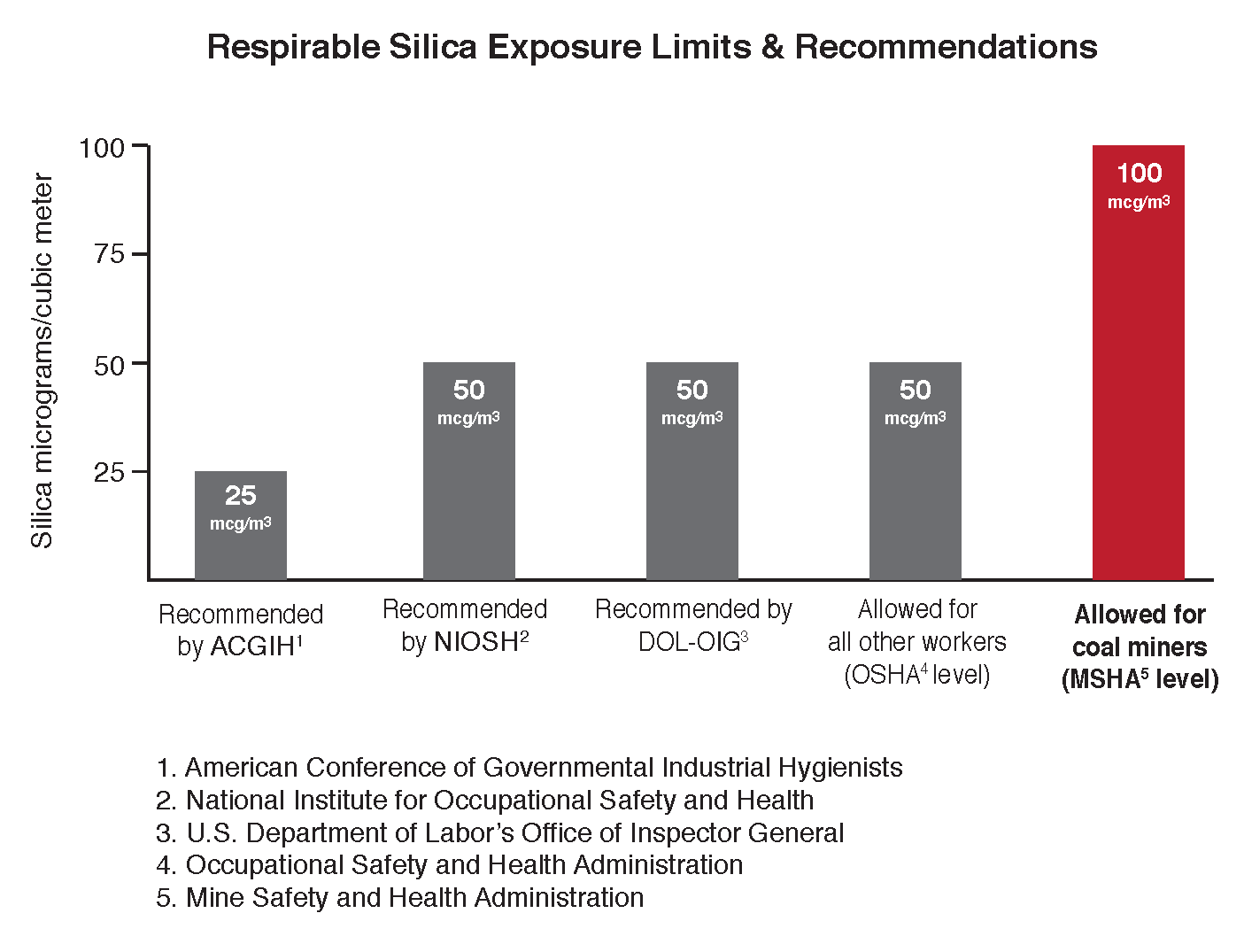
Today’s coal mining exposes workers to far more than coal dust alone. As easily accessible coal seams are depleted, miners are cutting through more rock to reach thinner seams of coal. This rock contains high levels of silica—a mineral that is significantly more toxic than coal dust and can scar lung tissue much more quickly.
Exposure to silica dust is now widely recognized as a major driver behind the sharp rise in severe black lung disease, including progressive massive fibrosis (PMF). Unlike traditional black lung, silica-related disease can develop faster, progress more aggressively, and affect miners earlier in their careers.
Modern coal miners are working longer hours than ever before, with 10–12 hour shifts now common across much of Appalachia. While dust exposure limits are regulated, these limits are typically calculated based on shorter workdays, meaning longer shifts can significantly increase a miner’s total daily exposure.
Combined with increased production demands, these extended hours result in prolonged and repeated inhalation of harmful dust. Over time, even exposure levels considered “compliant” can accumulate and lead to serious, irreversible lung disease.
While federal regulations set limits on coal mine dust exposure, gaps in enforcement and monitoring have allowed dangerous conditions to persist. In some cases, dust sampling systems can fail to capture real working conditions, and enforcement actions may come only after prolonged exposure has already occurred.
Regulatory updates have often lagged behind scientific evidence, particularly regarding silica exposure. Without stronger enforcement and modernized protections, miners remain vulnerable to harmful dust levels despite existing laws designed to protect them.
Check out the most recent analysis of MSHA sampling here.
Black Lung Beneficiaries
While this black lung beneficiary map is our best look yet at congressional and county-level data, there are some disclaimers to note. In the public records response, the DOL notes that zip codes for payments might not always correspond to where a black lung beneficiary lives. The data locates the beneficiary at the location of where the post office physically resides, which may not actually correspond with the congressional district of the beneficiary, but in most cases it will.
Nevertheless, this is a starting point to expanding our understanding of the crisis.
Map credit: Matt Hepler, Appalachian Voices Source: Analysis of public records data received from Department of Labor, December 23, 2025. Note: This embedded map shows a subset of available layers. To view the full interactive map and access additional data layers, open the map directly in ArcGIS Online or click the open in mapviewer button on the map.