

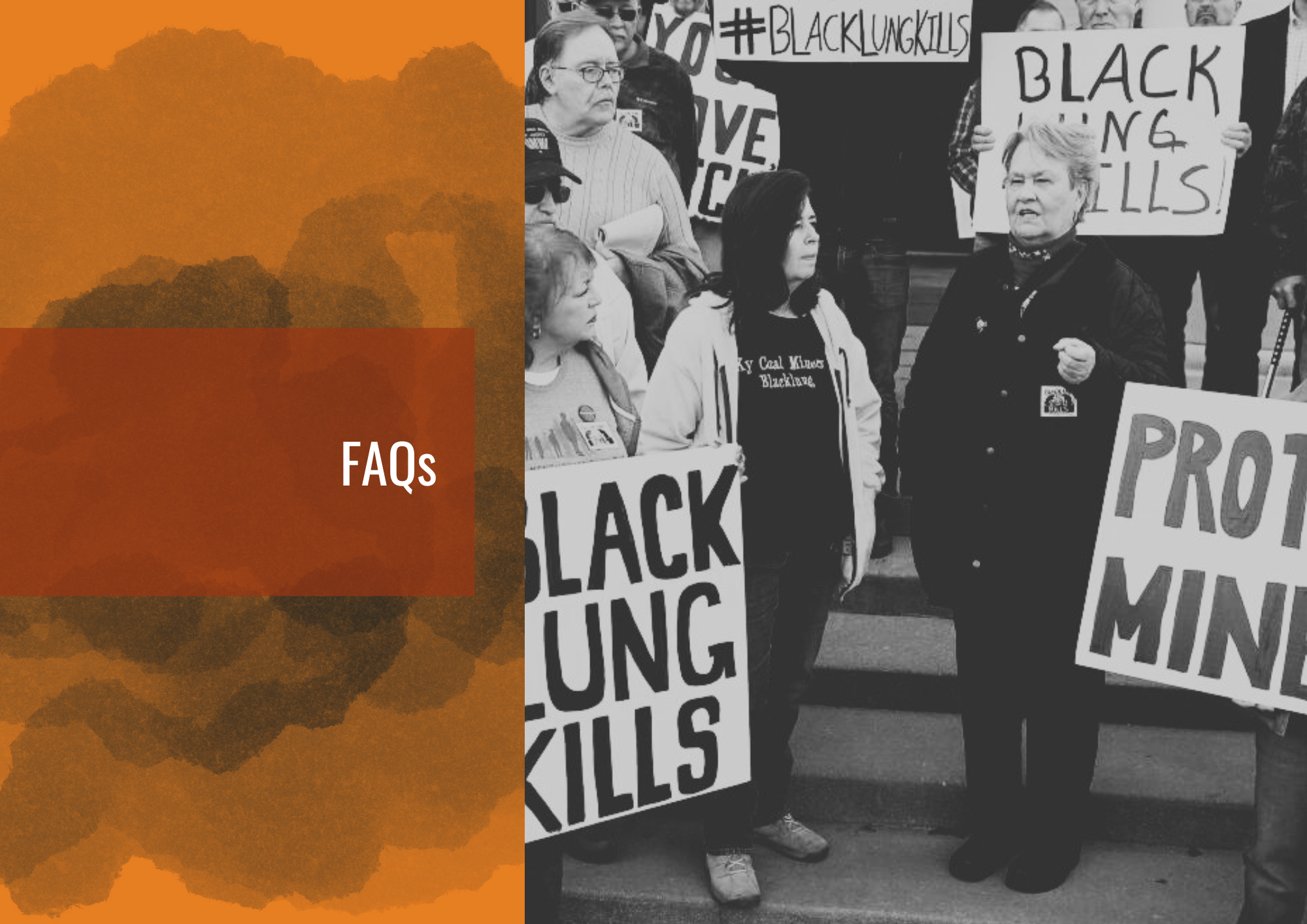
Photo Credit: Alex Slitz / LA TimesDisclaimer
The following represents a series of frequently-asked questions and answers. This is not intended to be legal or medical advice. Please contact a black lung attorney or black lung clinic for further questions.
Can black lung disease be missed or misdiagnosed?
What is the Black Lung Benefits Program?
What is the Black Lung Disability Trust Fund?
Who qualifies for black lung benefits?
How long does the claims process take?
Do I need a lawyer to file a claim?
What is a Part 90 transfer?
How do I qualify for a Part 90 transfer?
Can my employer deny a Part 90 transfer?
Will I lose my job if I am diagnosed?
Can former or retired miners file for benefits?
What is the difference between federal and state black lung benefits?
Can I receive both federal and state black lung benefits?
What happens if my state claim is denied?
Can I receive Social Security Disability Insurance (SSDI) and black lung benefits at the same time?
Will my black lung benefits affect my Social Security retirement benefits?
Are black lung benefits considered taxable income?
Can survivors receive both state and federal benefits?
Yes. Black lung is frequently underdiagnosed because:
Symptoms resemble other lung diseases (like COPD)
Patients may not disclose full work histories
Physicians may misdiagnose CWP as lung cancer
Some miners avoid screenings due to fear of job consequences
If you are an active or retired miner, it is important that you get a physical check-up from a registered pulmonologist at a black lung clinic or via the NIOSH health surveillance van, even if you are not currently exhibiting any symptoms.
The Black Lung Benefits Program provides monthly compensation and medical coverage to coal miners who are totally disabled by black lung, as well as to their surviving dependents. Managed by the Department of Labor, the program ensures medical care for lung impairments related to coal and silica dust exposure, with benefits paid by responsible coal operators or the Black Lung Disability Trust Fund.
As of 2026, the current monthly benefits stipends are as follows:
Primary Beneficiary: $793.60
Primary + 1 Dependent: $1,190.30
Primary + 2 Dependents: $1,388.70
Primary + 3+ Dependents: $1,587.10
The Black Lung Disability Trust Fund is a federal fund that pays medical benefits and monthly compensation to coal miners and their survivors disabled by black lung when no responsible mine operator can be identified or is able to pay. Funded by an excise tax on coal production, it acts as a safety net when operators are insolvent.
As of 2026, the current excise taxes are: $1.10 per ton for underground-mined coal and $0.55 per ton for surface-mined coal, rates that were made permanent by the Inflation Reduction Act of 2022.
To qualify for black lung disability benefits, a miner must generally show:
A history of coal mine employment
A diagnosed lung disease of CWP or PMF
Evidence the disease is related to coal dust exposure
Total disability caused by the condition
The claims process can vary depending on the following factors:
Medical Evidence: This is the initial step in the benefits claim process. However, the timeline can vary for individuals depending on how long it takes to gather the necessary medical records, get the required medical examinations, and review the medical evaluations.
Case Complexity: In some cases, there may be additional relevant medical or legal issues that arise, further delaying the process.
Appeals: If your initial application is denied, or there are additional questions about benefit amounts, the appeals process can take longer.
Claims Backlog: The number of claims overseen by the Office of Workers’ Compensation Programs can affect the processing time of case. The higher the number of claims in process, the longer the wait time.
Because of the lengthy and complex nature of black lung benefits claims, you should expect that your case could take months to several years to finally be adjudicated.
No, you are not required to have a lawyer when filing a black lung claim, but many miners and their families choose to work with one due to the complexity of the process. Legal assistance can help gather medical evidence, meet deadlines, and navigate appeals processes.
A Part 90 transfer is a legal right under federal law that allows miners diagnosed with black lung to move to a less dusty job in the mine while keeping the same pay, benefits, and work schedule.
This protection is enforced under regulations administered by the Mine Safety and Health Administration (MSHA).
To qualify for Part 90, a miner must:
Have a medical determination of black lung disease
Submit that determination to their employer
Once approved, the miner can request reassignment to a position with reduced dust exposure. You do not need to submit your Part 90 transfer form if you choose to withhold that right and your employer will not be made aware of your medical determination without your consent.
No. If you qualify, your employer must provide you with a position with:
Lower dust exposure
The same rate of pay
No loss of benefits
However, enforcement issues and workplace pressures can still arise. If that occurs, it is important that you contact legal assistance or your union representative if you are covered by a collective bargaining agreement.
It is illegal for employers to fire or discriminate against miners for having black lung or requesting a Part 90 transfer.
That said, many miners report concerns about retaliation, which can discourage testing or reporting symptoms.
Yes. Former miners can file claims even years after leaving the industry. However, gathering documentation may become more difficult over time.
Federal benefits are provided through the Black Lung Benefits Program, which offers monthly payments and medical coverage to eligible miners and their survivors.
Some states also have their own workers’ compensation programs that may provide benefits for occupational lung diseases. These state benefits vary widely in eligibility, payment levels, and coverage.
In many cases:
Federal benefits provide baseline protection
State programs may offer additional or overlapping support depending on the state
Yes and no. In many cases you can receive both federal and state black lung benefits, but there are important limitations.
If you qualify for both:
Your federal benefits may be reduced based on the amount you receive from a state program
This is to prevent duplication of benefits for the same disability
The exact interaction depends on the state and the specifics of your claim.
You can still pursue a federal black lung claim, even if your state workers’ compensation claim is denied because federal claims often use different medical and legal standards.
The two systems operate independently, meaning that a denial at the state level does not automatically disqualify you federally.
Yes. You can receive both SSDI and federal black lung benefits.
However, SSDI may be offset (reduced) depending on your total combined benefits and the total amount you receive may be capped under federal rules.
Generally speaking, federal black lung benefits do not reduce standard Social Security retirement benefits.
However, if you are receiving SSDI, offsets may apply until you reach retirement age.
Federal black lung benefits are generally not taxable under federal tax law.
However, other benefits you receive (like SSDI or state disability) may be taxable depending on your total income. Therefore, you may want to consult a tax professional for your specific situation.
Yes. Eligible survivors, such as spouses or dependents, may receive federal survivor benefits through the Black Lung Benefits Program and state-level survivor or workers’ compensation benefits.
As with miners’ benefits, offsets may apply depending on the combination of payments.